How dehumidifiers work
How Dehumidifiers Work
A dehumidifier draws moist air across a cold coil, collects the condensate, and returns drier air. Ratings and drain hardware are separate questions.
On this page
What the machine is doing
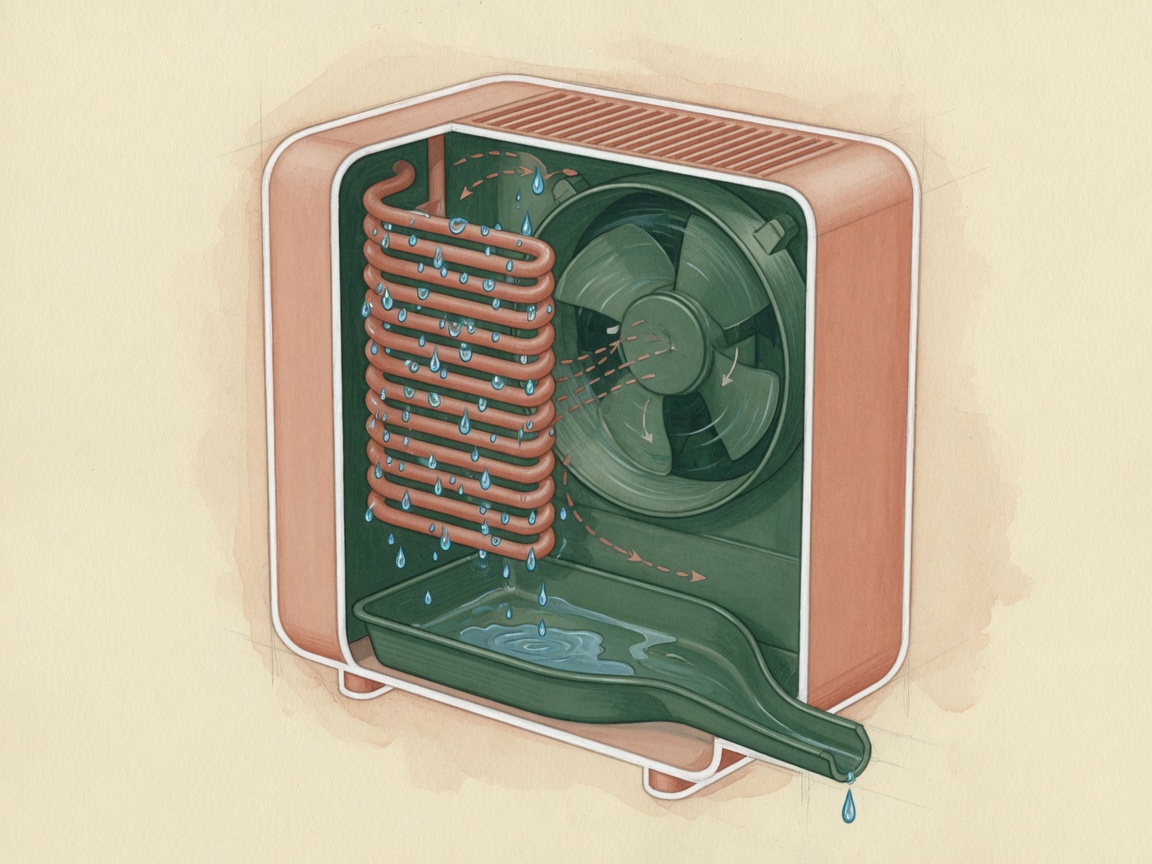
A dehumidifier works as a small refrigeration appliance. A fan pulls room air into the cabinet. That air passes over a cold evaporator coil. Water vapor condenses on the cold surface and runs off as liquid. The same unit then usually passes the air over a warm condenser coil and sends it back into the room drier and slightly warmer than it arrived.
The job is moisture removal, not air conditioning. The room should feel less damp. It should not be expected to behave like a window air conditioner.
The moisture-removal path
Moist air hits the cold coil first. When the coil surface is below the air’s dew point, water condenses. If airflow is weak—because a filter is loaded or the intake is blocked—less air reaches the coil, collection falls, and frost becomes more likely.
After the water leaves the airstream, the remaining air moves across the condenser, where the heat removed at the evaporator is rejected. That is why exhaust air from a dehumidifier is often warm. The machine is pumping heat from the evaporator to the condenser while stripping water out of the circulating air.
Where the water goes
Condensate has to leave the coil. On most portable dehumidifiers it drips into an internal bucket, a gravity hose, or a pump outlet, depending on the model. If the bucket is full or the drain path is blocked, the unit should stop collecting rather than overflow—when the documented shutoff is working.
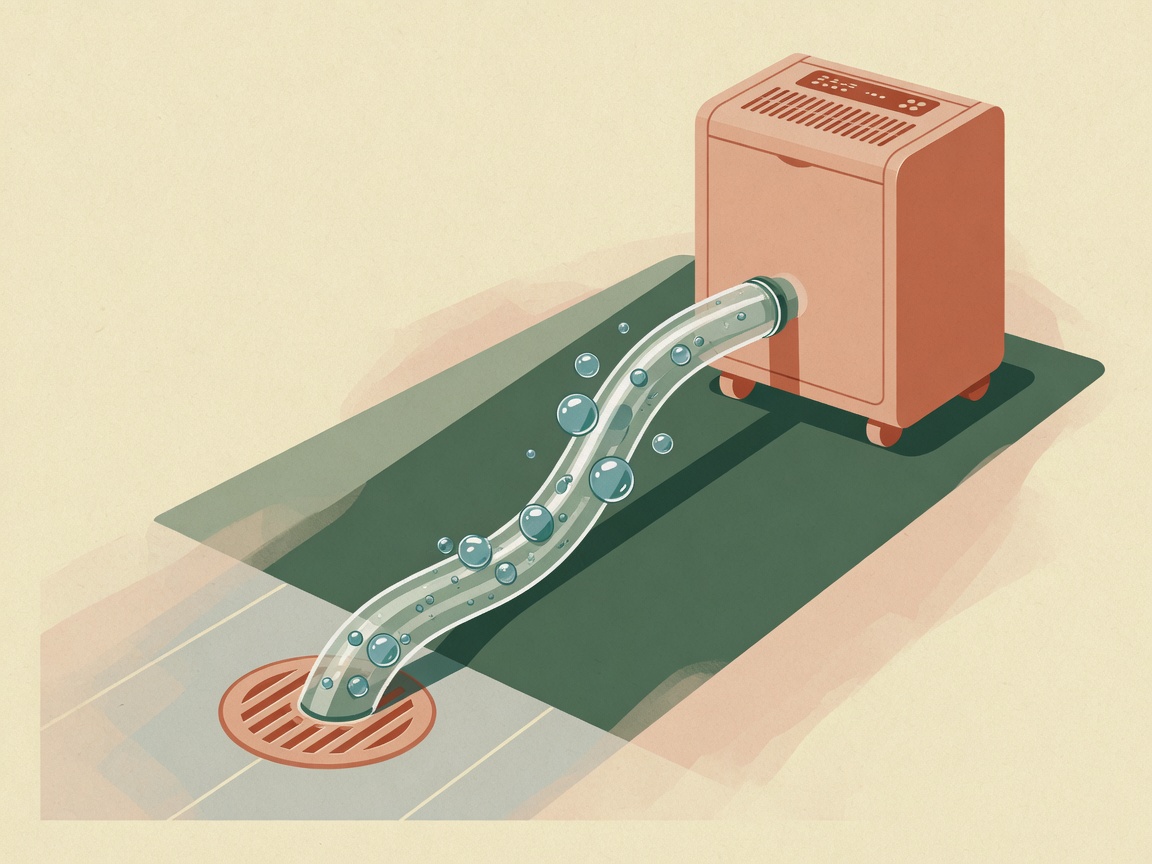
Bucket, hose, and pump options, and which layout a room can support, are covered in how dehumidifiers drain. This page only needs the mechanical fact: the refrigeration cycle creates liquid water, and that water has to go somewhere.
Controls, frost, and why output varies
A humidistat or humidity control turns the compressor on when the room is above the set point and off when it is not. Fan-only or continuous modes, where offered, change how often air moves even if the compressor is cycled. Use the control scheme the manufacturer documents for that model.
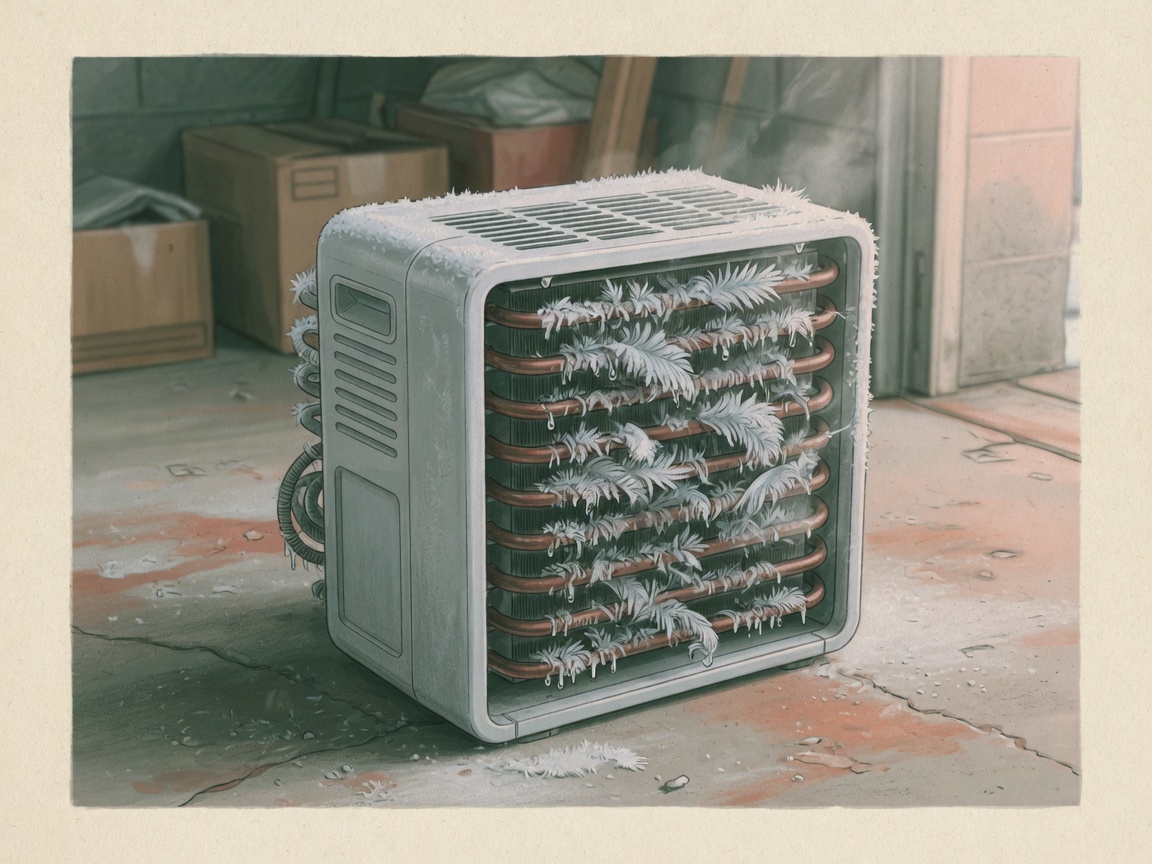
In a cool space the evaporator can drop below freezing. Ice on the coil blocks airflow and stops useful collection. Many units have an automatic defrost cycle for stated temperature ranges. If icing continues after airflow and temperature checks, follow why a dehumidifier ices up rather than scraping the coil.
How much water you actually see in the bucket depends on incoming humidity, temperature, runtime, and airflow—not only on the size of the cabinet. Rated pint capacity and IEF are standardized comparison numbers. They are explained in DOE pint ratings, not here.
Sources
Keep reading
Related guides
Why a Dehumidifier Ices Up
Check airflow and temperature, then stop if ice returns.
DOE Pint Ratings Explained
What a pint rating measures, and when two numbers are not on the same scale.
How Dehumidifiers Drain
Bucket, gravity hose, or pump — what each method needs from the room.