Choosing a dehumidifier
How to Choose a Dehumidifier: Capacity, Efficiency, and Practical Features
Choose a dehumidifier by the job, documented capacity, drain path, and upkeep—not by a square-footage claim or a larger pint number.
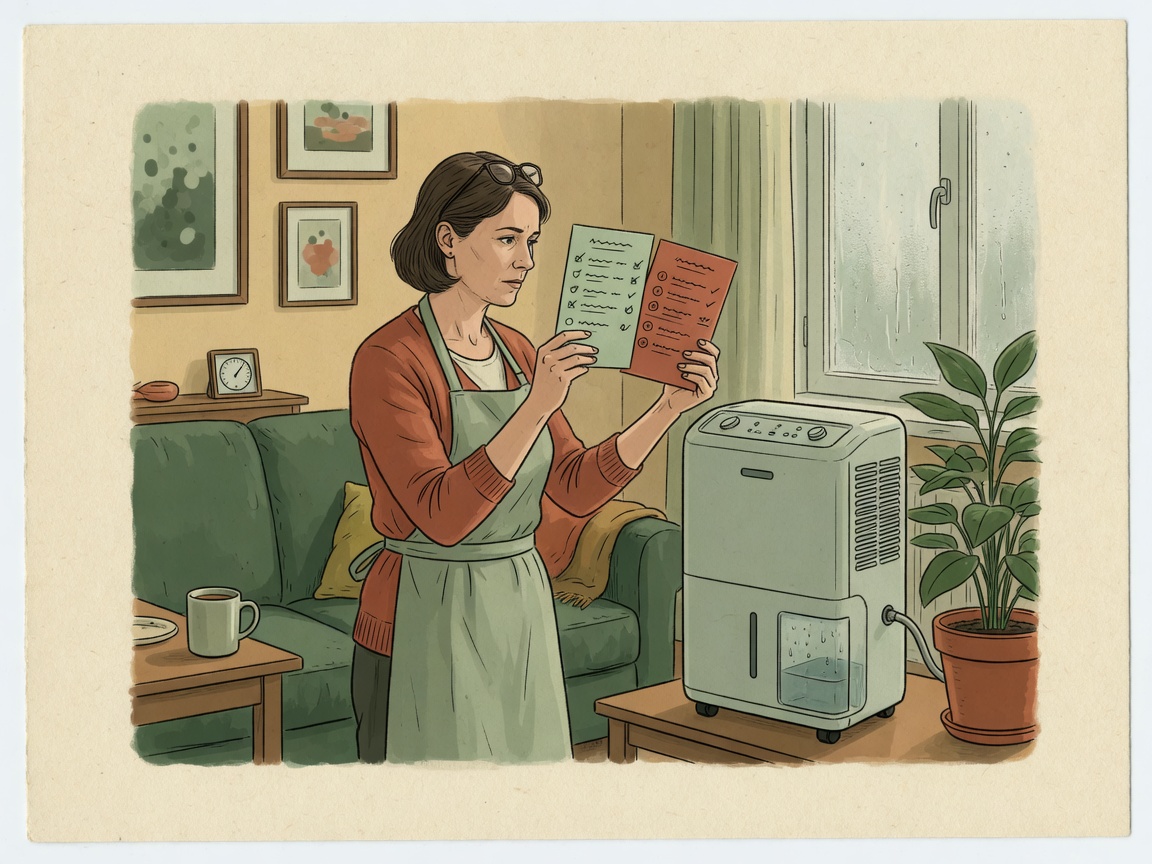
On this page
Start with the job, not the model
A portable dehumidifier is built to control moisture in a room or a defined area. A whole-home unit is an installed system. Choose the category from the space you need to manage, then compare specifications inside that category.
Capacity is the first number to read, but it is not a room-by-room guarantee. Larger, wetter spaces generally need more moisture-removal capacity. For how those pint figures are measured, use DOE pint ratings explained. For a basement, garage, or crawl space, start with the space-specific guide after this framework.
What changes the decision
| Question | What to verify |
|---|---|
| What is the job? | The space, moisture load, and operating temperature as documented |
| How is capacity labeled? | The published test method, not a marketing square-footage claim |
| How will it drain? | Bucket, gravity hose, or a pump the document specifies for that model |
| If a spec is missing? | Do not infer it from a similar model or a family manual |
Match capacity to the work
Product capacity is the water a dehumidifier can remove in 24 hours under specified test conditions, usually reported in pints per day. A number without its method is a weak comparison. Portable and whole-home units use different rating frameworks, so do not treat their pint figures as the same scale.
Current and older pint ratings may use different test conditions, so the numbers are not always directly comparable. How those ratings are measured is in DOE pint ratings explained. Use the current documented rating for the model in front of you.
Efficiency, drainage, and upkeep
After capacity fits the job, compare efficiency with Integrated Energy Factor when it is published. IEF is liters of moisture removed per kilowatt-hour and is meaningful only inside the same product category and rating basis. ENERGY STAR status is a separate program check, not a substitute for capacity. Details live in ENERGY STAR and IEF.
Drainage decides whether the unit can run unattended. A portable model may need a bucket emptied unless it supports a hose or pump path that actually fits the room. The methods, and which one your site can support, are covered in how dehumidifiers drain.
Filter access, coil cleaning, and service clearance matter as much as the purchase-day specs. If you cannot reach the filter or drain connection after the unit is in place, the setup will not hold. How to maintain a dehumidifier covers the routine.
Before you buy
Confirm the capacity, test method, product category, and IEF on the same specification sheet. Confirm the drain connection, hose size, and whether a pump is specified for that model—not for a related model in the same family. Check operating-temperature limits against the room, especially if the space is cool.
Then check physical fit: case size, clearances, electrical service, and, for a whole-home unit, ducting and professional installation. A larger printed pint number is not proof that the product is the right choice.
Sources
Find dehumidifiers on Amazon (paid link)
Keep reading
Related guides
Dehumidifier for a Basement
Cool rooms, moisture load, and a drain path you can live with.
DOE Pint Ratings Explained
What a pint rating measures, and when two numbers are not on the same scale.

ENERGY STAR and IEF
Read efficiency next to capacity, inside the right product category.