Capacity and labels
How to Read Dehumidifier Capacity Ratings
Capacity classes are pint ratings under a stated test method. Match the class to the moisture load, and compare numbers only on the same rating basis.
On this page
What a capacity class is
Dehumidifier capacity classes group units by rated moisture removal: water removed in 24 hours under specified test conditions, reported in pints per day. Shoppers meet that number as a class. The class is a standardized comparison, not a promise that the unit will collect that many pints in a particular room.
How DOE measures those pints, including the shift to a 65°F portable test, is explained in DOE pint ratings. This page is about using the class once you know the method.
What the class is good for
| Use the class to | Do not use the class to |
|---|---|
| Group products with similar rated removal | Assume a square-footage claim replaces moisture load |
| Match a wetter space to a higher pint class | Treat an old label and a new label as the same class |
| Separate portable pint classes from whole-home ratings | Pick a winner from the largest printed number |
Match class to moisture load
Room size matters, but dampness matters more. A small, persistently wet space can need more capacity than a large, only mildly humid one. Laundry, groundwater, poor ventilation, and cool concrete all raise the load.
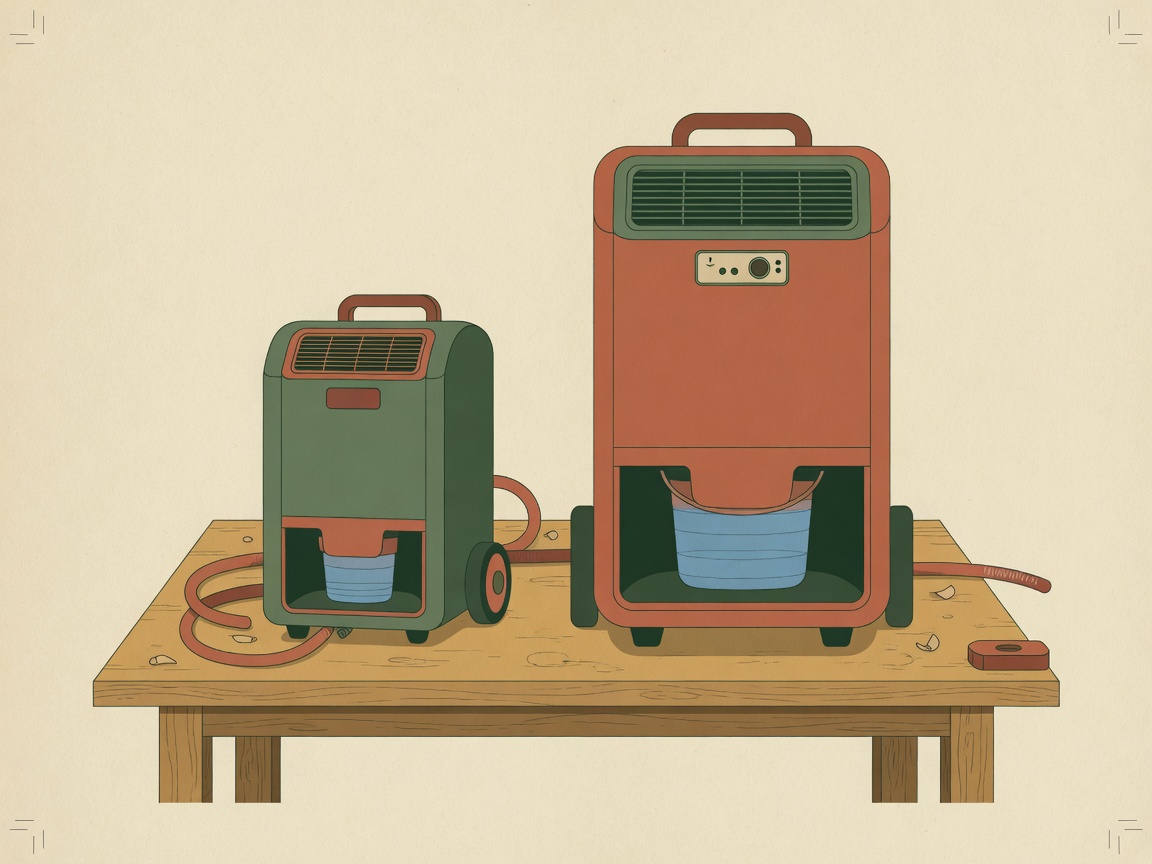
Choosing between the two most common portable classes is a separate decision in 35-pint versus 50-pint. If you are staring at an older 70-pint box next to a current 50-pint listing, the labels are not on the same scale; use old 70-pint versus new 50-pint.
Read the rest of the spec sheet
After the class fits the job, check IEF or ENERGY STAR status inside that category, operating-temperature range, and drainage. Whole-home products also list case volume—the rectangular case, excluding duct collars—because efficiency bands use that volume rather than a portable pint class.
Use the current documented rating. If the method is missing, the class is only a starting label. Do not pick the unit with the biggest printed capacity as if that settled the job.
Sources
Keep reading
Related guides
35-Pint vs 50-Pint
A class-level decision from moisture load, not a product ranking.
DOE Pint Ratings Explained
What a pint rating measures, and when two numbers are not on the same scale.
How to Choose a Dehumidifier
Match capacity, drain path, and upkeep to the job — not a square-footage claim.