Drainage
How to Set Up a Continuous Drain on a Dehumidifier
Set up a dehumidifier continuous drain by confirming the model’s method, connecting the specified hose, sloping the run, and testing for leaks before you leave it.
On this page
Confirm the method first
Continuous drain means condensate leaves through a hose instead of filling the bucket. It is not a separate product category. The model either supports a gravity outlet, a pump outlet, both, or neither. Read that model’s instructions for the connection point and any required control setting before you cut hose.
If you still need to decide gravity versus pump, stop here and use pump versus gravity drain. This page is the hookup sequence.
The working sequence
Switch the unit off and disconnect power. Remove the bucket if the manual requires it to reach the drain port. Attach only the hose size and fitting specified for that outlet. Do not force a different appliance hose onto the port.
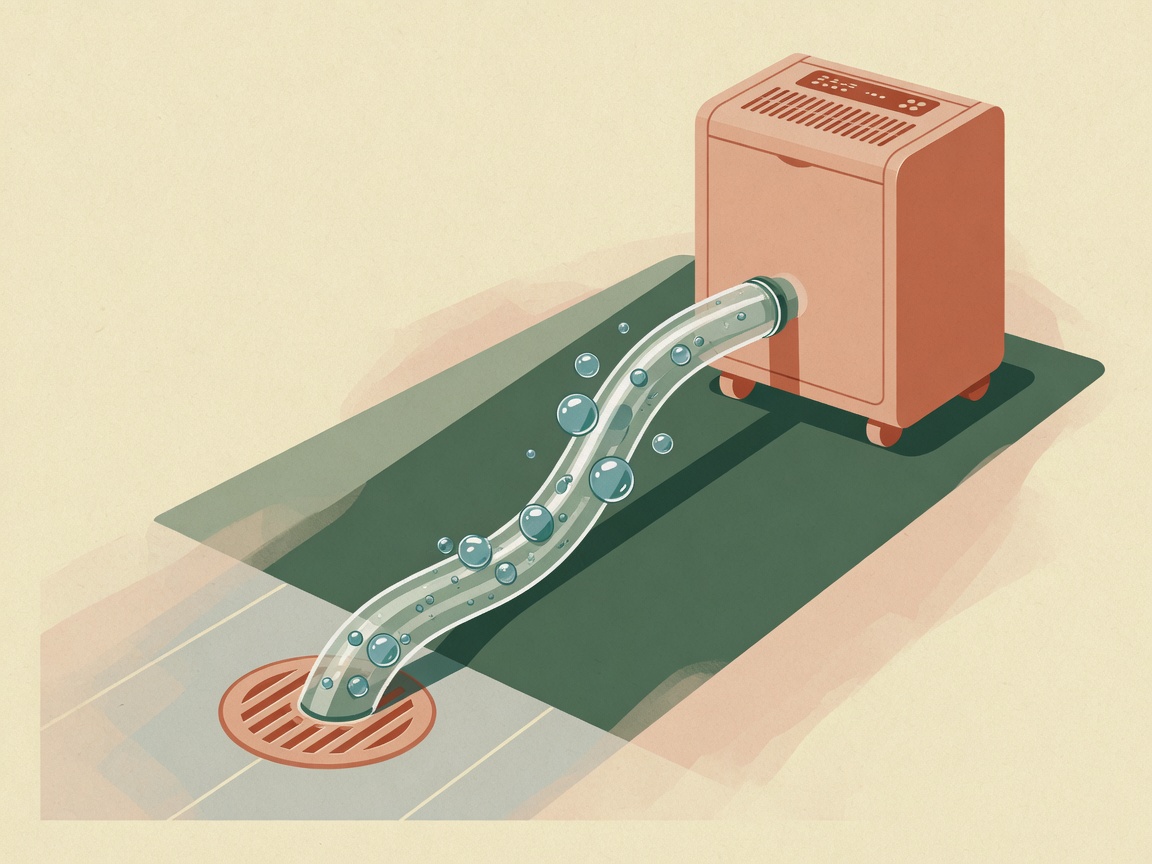
For gravity drainage, route the hose to a floor drain, sink, or standpipe that sits below the outlet. Keep a continuous downward slope with no loops or crushed sections. Secure the connection at the cabinet so it cannot pull loose.
For a documented pump, connect the discharge hose to the pump outlet and run it to the approved destination within the stated lift. Do not substitute a gravity-only unit plus an unapproved add-on pump unless the manufacturer specifies that accessory for the SKU.
Restore the bucket or cover as directed, reconnect power, and enable continuous drain if the controls require it. Watch one collection cycle. Water should leave through the hose, the cabinet connection should stay dry, and the unit should not sit on a full-bucket shutoff.
If it is not draining
If the bucket still fills, the continuous-drain setting may be off, the hose may be too high, or the outlet may still be closed. If the floor is wet, disconnect power, stop using the hose, and inspect the fitting and destination before running the unit again.
Kinks, debris, and a hose end submerged in standing water can all stall gravity flow. A pump that hums without moving water, or that exceeds its lift, needs the documented service path—not a longer hose as a guess. Return to bucket collection until the path is correct.
Sources
Keep reading
Related guides
How Dehumidifiers Drain
Bucket, gravity hose, or pump — what each method needs from the room.
How to Maintain a Dehumidifier
Bucket, filter, and drain-path checks that keep the unit collecting.
Pump vs. Gravity Drain
Choose downhill hose drainage or a documented pump from the drain route.